
Grades 9 and 10: The Waldorf Foundation Years
In Grades 9 and 10, students continue their education through a Waldorf approach while studying a broad range of academic subjects that prepare them for their senior years of high school.
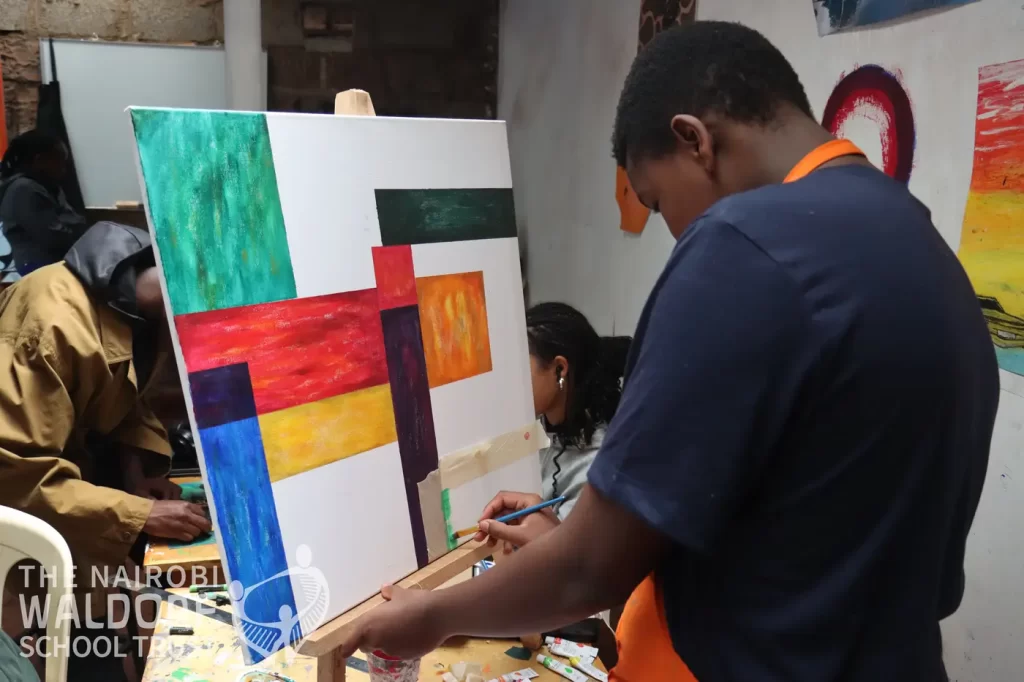
The programme combines academic study with the practical, artistic and experiential elements that are central to a Waldorf education. Students are encouraged to develop a strong understanding of their subjects while learning to think independently, make connections and engage deeply with what they are studying.
Subjects offered
Students study Mathematics, English Language and English Literature as core subjects. They also choose from a range of subjects across the sciences, humanities, creative and commercial subjects, and languages.
Sciences: Biology, Chemistry and Physics
Humanities: Geography and History
Creative and commercial subjects: Business Studies, Art and Design, and Music
Languages: Kiswahili and French
The school recommends a balanced subject combination that allows students to develop academic depth while continuing with the wider Waldorf programme.
Learning in the Waldorf Way
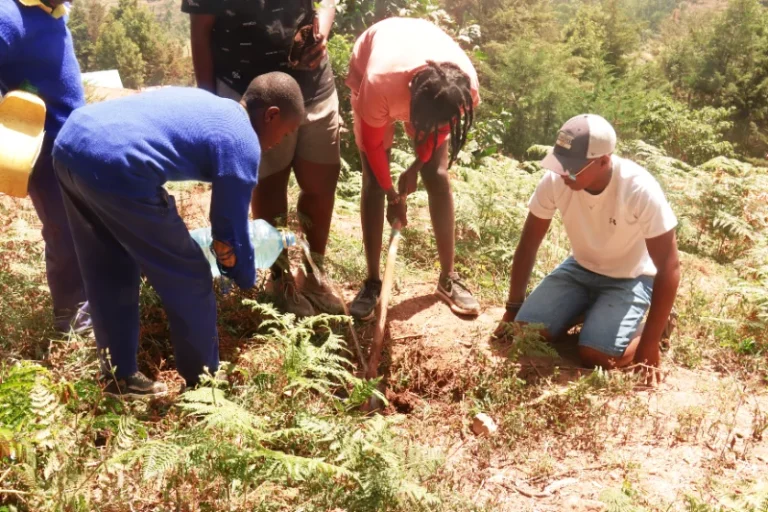
Academic subjects are taught within a Waldorf educational approach, where appropriate. Learning is not limited to textbooks and conventional classroom instruction. Students work through concepts in depth, make use of narrative, observation and practical experiences, and are encouraged to engage actively with their learning.
Main Lesson continues to form an important part of the programme, giving students extended periods to explore subjects and themes in greater depth. Students also continue with Eurythmy, Craft, Games and Guardian Lesson alongside their academic studies.
Preparing for the Senior Years
Grades 9 and 10 provide students with a strong academic foundation while allowing them to continue developing the independence, creativity, practical skills and confidence that are central to a Waldorf education.
As students approach the end of Grade 10, they are supported in considering the pathway that best suits their interests, strengths and future plans for Grades 11 and 12.
Option A: – International Baccalaureate® (IB) – A Gateway to Global Thinkers and Lifelong Learners
The International Baccalaureate Diploma Programme (IB DP) at Nairobi Waldorf School Trust High School offers a globally recognized educational pathway that prepares students not only for university but for lifelong learning and responsible global citizenship. Rooted in academic excellence and holistic values, our program nurtures well-rounded, intellectually curious, and socially responsible young adults ready to thrive in a complex world.
Our IB curriculum offers a diverse and comprehensive range of subject choices to align with varied student interests and future career aspirations. Students engage with a balanced approach that echoes the holistic philosophy of Rudolf Steiner, integrating rigorous academics with experiential learning, reflective practices, and collaborative projects that inspire deeper meaning and purpose in education.
The Diploma Programme (DP) is a rigorous pre-university course of study designed for students in the 16 to 19 age range. It is a broad-based two-year course that aims to encourage students to be knowledgeable and inquiring, but also caring and compassionate. There is a strong emphasis on encouraging students to develop intercultural understanding, open-mindedness, and the attitudes necessary for them to respect and evaluate a range of points of view.
The course is presented as six academic areas enclosing a central core. Students study two modern languages (or a modern language and a classical language), a humanities or social science subject, an experimental science, mathematics and one of the creative arts. Instead of an arts subject, students can choose two subjects from another area. It is this comprehensive range of subjects that makes the Diploma Programme a demanding course of study designed to prepare students effectively for university entrance. In each of the academic areas students have flexibility in making their choices, which means they can choose subjects that particularly interest them and that they may wish to study further at university.
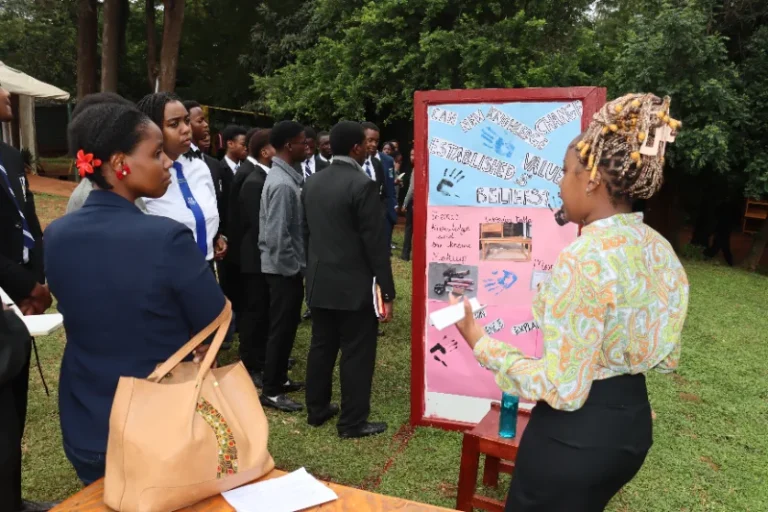
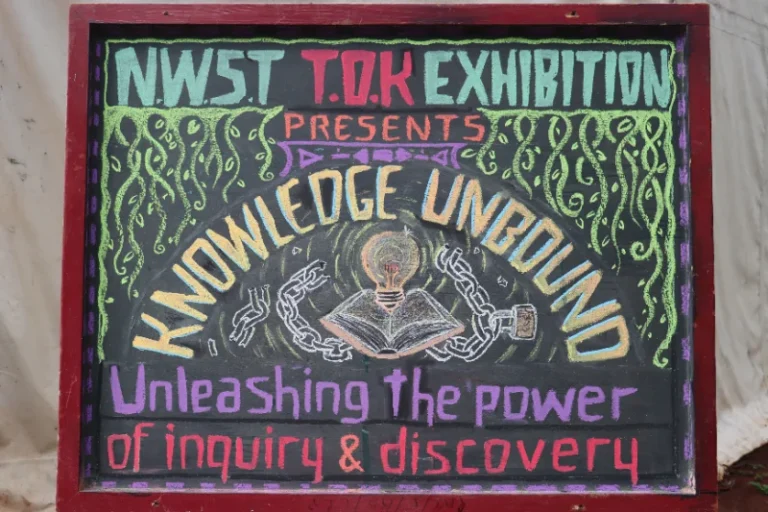
Normally, three subjects (and not more than four) are taken at higher level (HL), and the others are taken at standard level (SL). The IB recommends 240 teaching hours for HL subjects and 150 hours for SL. Subjects at HL are studied in greater depth and breadth than at SL. In addition, three core elements—the extended essay, theory of knowledge and creativity, activity, service—are compulsory and central to the philosophy of the Programme.
| # | Subject Area | Course |
|---|---|---|
| 1. | Studies in Language and Literature | English Language & Literature (HL & SL) |
| 2. | Language Acquisition | French B (HL & SL) & ab initio (SL) · Kiswahili B (HL & SL) & ab initio (SL) Additional languages may be taken on an externally tutored basis by arrangement with the IB Coordinator |
| 3. | Individuals and Societies | History (HL & SL) · Geography (HL & SL) · Business Management (HL / SL) · Environmental Systems and Societies (HL/SL) |
| 4. | Sciences | Biology (HL & SL) · Chemistry (HL & SL) · Physics (HL & SL) · Environmental Systems and Societies (HL/SL) |
| 5. | Mathematics | Mathematics: Analysis and Approaches (HL/SL) · Mathematics: Applications & Interpretation (HL/SL) |
| 6. | The Arts | Visual Arts (HL & SL) · Music (HL & SL) |
Option B: BTEC at NWST – A Pathway to Creative and Professional Excellence
The Business and Technology Education Council (BTEC) qualifications are career-focused programs that blend practical learning with theoretical knowledge, equipping students with the skills and competencies sought by employers and higher education institutions. Offered by Pearson, BTECs span various levels and sectors, providing flexible pathways to both university education and direct employment. At Nairobi Waldorf School Trust, we offer the globally recognized BTEC (Business and Technology Education Council) qualifications in Business and Art & Design, providing students with practical, skills-based learning that bridges the gap between academics and real-world application.
Why Choose BTEC at NWST?
- Practical Learning with Real-World Application — Our BTEC programs emphasize experiential learning, where students apply theoretical knowledge through hands-on projects, real-life business simulations, and creative design assignments. This approach nurtures innovation, critical thinking, and problem-solving skills.
- Business: Developing Future Entrepreneurs and Leaders — The BTEC Business course equips students with essential skills in entrepreneurship, management, marketing, and finance. Students engage in practical projects that mimic real-world business challenges, preparing them for dynamic careers or further studies in commerce and management.
- Art & Design: Cultivating Creativity and Visual Storytelling — The BTEC Art & Design curriculum inspires students to explore their artistic talents through various media, from digital design to traditional fine arts. With a focus on both creative expression and commercial applications, students gain a strong foundation for careers in graphic design, fashion, visual arts, and more.